

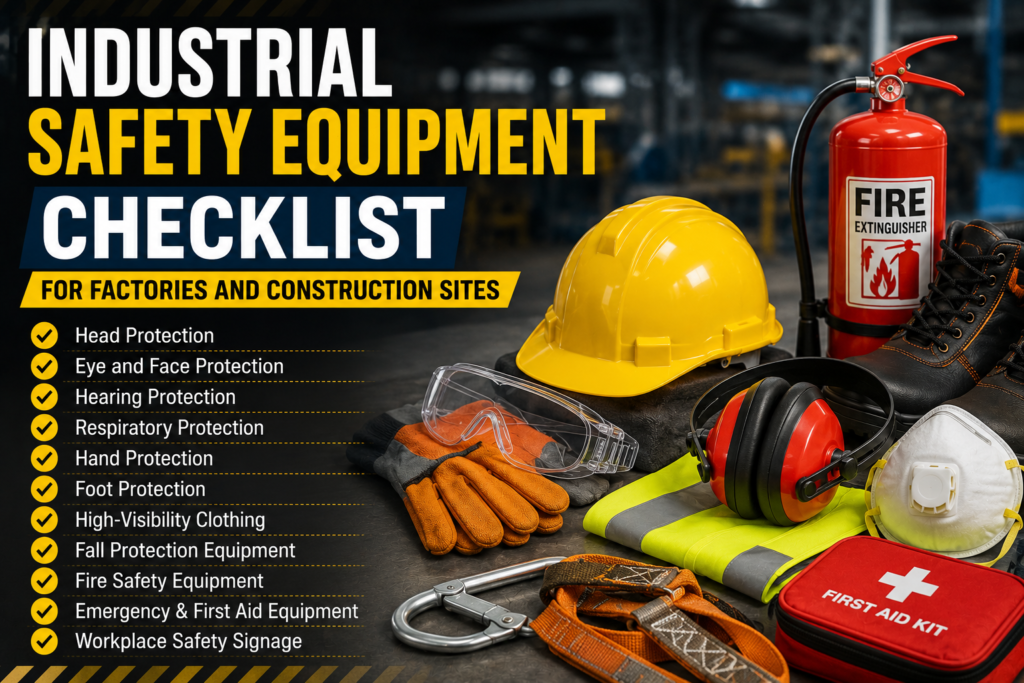
Industrial Safety Equipment Checklist for Factories and Construction Sites
Workplace safety is one of the most important responsibilities for every factory owner, contractor, and site manager. Whether you operate a manufacturing plant, warehouse, or construction site, providing the right Industrial Safety Equipment helps reduce accidents, improve productivity, and ensure compliance with safety regulations. Investing in quality protective gear not only protects employees but also minimizes downtime, legal risks, and financial losses.
This comprehensive checklist covers the essential safety equipment every industrial workplace should have to create a safer working environment.
Why Industrial Safety Equipment Is Important
Every workplace has potential hazards such as falling objects, electrical risks, chemical exposure, heavy machinery, loud noise, and working at heights. Proper Industrial Safety Equipment acts as the first line of protection against these hazards. It helps prevent serious injuries, promotes employee confidence, and supports compliance with workplace safety standards.
A well-equipped workplace also demonstrates an organization’s commitment to employee health and operational excellence.
Complete Industrial Safety Equipment Checklist
1. Safety Helmets (Hard Hats)
Hard hats protect workers from falling objects, head injuries, and electrical hazards. They are mandatory for construction sites, factories, and industrial facilities.
Checklist:
- ISI or certified helmets
- Adjustable chin straps
- Regular inspection for cracks or damage
2. Safety Shoes
Safety footwear protects workers from heavy impacts, punctures, slips, and electrical hazards.
Checklist:
- Steel toe protection
- Slip-resistant soles
- Oil and chemical resistance
- Comfortable fit
3. Safety Gloves
Different tasks require different glove materials to protect against cuts, chemicals, heat, and electrical hazards.
Checklist:
- Cut-resistant gloves
- Chemical-resistant gloves
- Heat-resistant gloves
- Electrical insulating gloves
4. Eye Protection
Eye injuries can occur due to flying particles, dust, sparks, or chemical splashes.
Checklist:
- Safety goggles
- Protective safety glasses
- Anti-fog lenses
- UV protection where required
5. Face Shields
Face shields provide complete facial protection during grinding, welding, or chemical handling.
Checklist:
- Scratch-resistant visor
- Adjustable headgear
- Impact-resistant material
6. Respiratory Protection
Workers exposed to dust, smoke, toxic gases, or airborne particles require proper respiratory protection.
Checklist:
- N95 masks
- Half-face respirators
- Full-face respirators
- Replaceable filters
7. Hearing Protection
Continuous exposure to loud machinery can cause permanent hearing loss.
Checklist:
- Ear plugs
- Ear muffs
- Noise Reduction Rating (NRR) compliance
8. Reflective Safety Jackets
High-visibility clothing helps workers remain visible around moving vehicles and heavy equipment.
Checklist:
- Reflective strips
- Bright fluorescent colors
- Weather-resistant fabric
9. Fall Protection Equipment
Construction and maintenance workers operating at heights require reliable fall protection.
Checklist:
- Full-body safety harness
- Shock-absorbing lanyards
- Lifelines
- Anchorage systems
10. Protective Clothing
Specialized clothing protects workers from chemicals, heat, sparks, and hazardous substances.
Checklist:
- Flame-resistant coveralls
- Chemical-resistant suits
- Waterproof protective clothing
11. Fire Safety Equipment
Every industrial workplace should have effective fire protection systems.
Checklist:
- Fire extinguishers
- Fire blankets
- Smoke detectors
- Fire alarm systems
12. First Aid Kits
Immediate medical response can reduce the severity of workplace injuries.
Checklist:
- Bandages
- Antiseptic solution
- Burn dressing
- Gloves
- CPR mask
- Emergency contact list
13. Lockout Tagout (LOTO) Devices
LOTO devices prevent accidental machine startup during maintenance.
Checklist:
- Lockout padlocks
- Warning tags
- Circuit breaker lockouts
- Valve lockouts
14. Gas Detection Systems
Factories dealing with chemicals or confined spaces should install gas detectors.
Checklist:
- Oxygen monitors
- Carbon monoxide detectors
- Multi-gas detectors
- Regular calibration
15. Spill Control Kits
Spill kits help safely manage chemical, oil, and hazardous liquid spills.
Checklist:
- Absorbent pads
- Disposal bags
- Protective gloves
- Spill socks
16. Safety Signage
Clear safety signs help employees recognize hazards quickly.
Checklist:
- Exit signs
- Warning signs
- Mandatory PPE signs
- Emergency assembly point signs
17. Emergency Lighting
Emergency lighting ensures safe evacuation during power failures.
Checklist:
- Backup battery
- Illuminated exit routes
- Monthly testing
18. Safety Barriers and Cones
Safety barriers prevent unauthorized access to hazardous work areas.
Checklist:
- Traffic cones
- Barricade tape
- Expandable barriers
- Warning boards
Tips for Choosing Industrial Safety Equipment
When purchasing Industrial Safety Equipment, consider the following:
- Select certified and tested products.
- Match equipment to workplace hazards.
- Choose durable and high-quality materials.
- Ensure proper fit and comfort.
- Train employees on correct usage.
- Conduct regular inspections and replace damaged equipment promptly.
Benefits of Using Industrial Safety Equipment
Implementing the right Industrial Safety Equipment provides several advantages:
- Reduces workplace injuries and accidents
- Improves employee productivity
- Ensures legal compliance
- Builds a stronger workplace safety culture
- Lowers insurance and compensation costs
- Enhances business reputation
Conclusion
A safe workplace starts with the right Industrial Safety Equipment and a proactive approach to risk management. From helmets and safety shoes to gas detectors and fire protection systems, every item on this checklist plays a vital role in protecting workers and maintaining smooth operations.
By regularly inspecting equipment, training employees, and investing in certified safety gear, factories and construction companies can create a safer, more productive work environment while meeting industry safety standards.
Related Posts
August 22, 2026
Safety Products for the Manufacturing Industry
Safety Products for the Manufacturing Industry: Essential Equipment for Workplace Safety Manufacturing facilities are busy…
August 22, 2026
High Quality Industrial Safety Products in Delhi
Finding reliable Industrial Safety Products in Delhi is essential for businesses that want to protect…
July 30, 2026
July 6, 2026
PPE Safety Equipment: Everything You Need to Know Before Buying
PPE Safety Equipment: Everything You Need to Know Before Buying Employee safety should always be…